Attraction is a fascinating and complex process that is influenced by biology, psychology, and social factors. It’s not just about looks – there are deep psychological mechanisms that shape why we are attracted to certain individuals. From facial symmetry and pheromones to shared interests and emotional intelligence, a variety of factors contribute to romantic and social attraction.
Here we will explore all the scientific and psychological reasons. Understanding the psychology of attraction we will try to understand how to have better relationships, improve our personal relationships and even how it can help in increasing our self-confidence. Here we will also know why we are attracted to certain people and how this knowledge can help us build meaningful relationships.
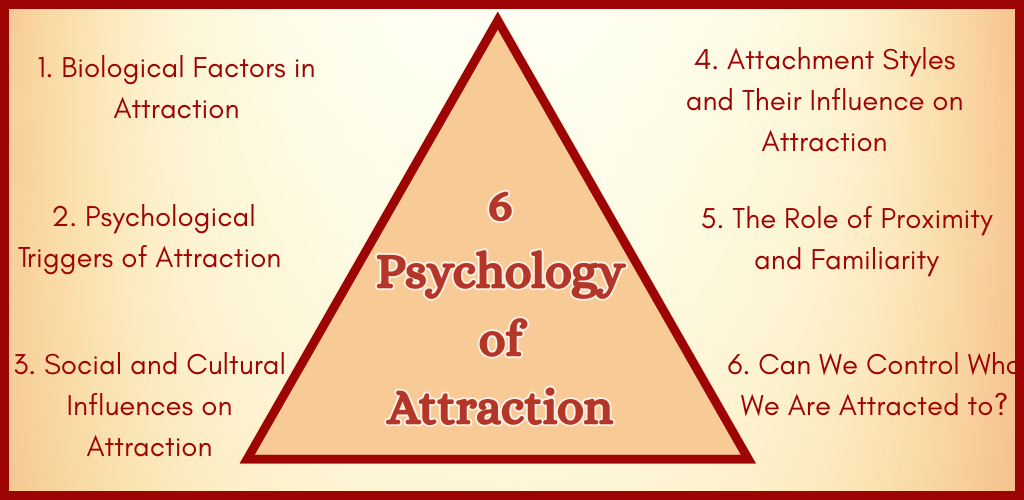
1. Biological Factors in Attraction
a) The Science of Facial Symmetry and Physical Appeal
Scientific studies show that facial symmetry is the biggest predictor of attractiveness. People with balanced facial features are often perceived as more genetically and healthily fit. This is because symmetry is an indicator of good health, which is an evolutionary advantage when choosing a mate.
Other physical traits such as clear skin, bright eyes and a well-built body also play a role in attractiveness. These features subconsciously signal good health, fertility and vitality.
b) Pheromones: The Hidden Chemical Connection
Pheromones are invisible chemical signals that influence attraction on a subconscious level. Research suggests that we are naturally attracted to mates whose immune systems are different from ours. This may lead to stronger and healthier future offspring. This is why we like some people’s natural scents more and feel an unexplained connection to them.
c) The Role of Dopamine, Oxytocin, and Serotonin
Our brain chemistry also plays a role in attraction. The inner pleasure we feel for someone releases dopamine, which makes us feel happy around certain people. It’s also known as the “love hormone” because it strengthens emotional bonds, while serotonin helps regulate mood and connection in relationships.
2. Psychological Triggers of Attraction
a) Similarity and Shared Interests
The similarity-attraction effect suggests that we are more attracted to people who share our values, interests, and personality traits. When we see similarities in someone, it creates a sense of familiarity and comfort, strengthening the emotional connection.
b) The Power of Emotional Intelligence
Emotional intelligence plays a key role in attraction to someone. People who can understand, manage, and express their emotions effectively tend to form strong relationships. People who make us feel heard, valued, and emotionally safe often end up being the most attractive.
c) The Influence of Confidence and Body Language
Confidence is an attractive quality in any person because it indicates self-confidence and leadership. People who make eye contact, have open body language, and exude positivity naturally attract others to them.
3. Social and Cultural Influences on Attraction
a) The Impact of Beauty Standards
Cultural norms shape our perception of beauty. For example, in Western societies, features such as tall height, slender bodies and sharp faces are often glorified. In contrast, other cultures may value curvy bodies, youthful facial features or dark skin.
b) Media and the Ideal Partner Stereotype
Movies, TV shows, and social media present certain qualities as “desirable,” creating unrealistic beauty and personality expectations. These portrayals make us feel attractive, often without us even realizing it.
c) The Scarcity Principle in Dating
People often find things more attractive that are perceived as rare or hard to get. The scarcity principle explains why pretending to be hard to get works in dating. However, real attraction is about mutual respect and effort, not just availability.
4. Attachment Styles and Their Influence on Attraction
Psychologists believe that our early childhood experiences shape our attachment patterns. Attachment theory categorizes people into four attachment styles:
Secure attachment: Secure attachment makes us feel good in relationships and values emotional connection.
Anxious attachment: Anxious attachment requires constant reassurance and fears abandonment.
Inhibited attachment: This attachment avoids deep emotional connections and values independence in a relationship.
Disorganized attachment: This attachment struggles with mixed feelings about any relationships.
People often subconsciously choose partners that mirror their childhood relationships, which can lead to healthy or toxic patterns.
5. The Role of Proximity and Familiarity
The proximity effect states that people are more likely to form relationships with people they see often, and this is because relationships are often formed in workplaces, schools, and communities.
Similarly, it is seen that attraction to someone increases simply through repeated contact, making familiarity a key component of romantic relationships.
6. Can We Control Who We Are Attracted to?
Although some aspects of attraction are already present in our bodies and minds, there are also ways to create deeper attraction:
Focus on emotional connection: You should focus not just on physical attraction, but also on shared experiences and deep conversations.
Work on personal development: Developing self-confidence, emotional intelligence, and self-awareness can make you more naturally attractive.
Recognize your wrong attractions: If you repeatedly get attracted to the wrong or harmful relationships, you need to understand this and try to change your expectations.
The Role of Physical Attractiveness
Our physical attractiveness plays an important role in first impressions and social interactions. Features such as facial symmetry, clear skin and body proportions often also signal good health and genetic fitness, making them universally attractive. The halo effect further enhances attractiveness by associating it with positive qualities such as intelligence and confidence, giving good-looking individuals social and professional advantages.
Cultural standards of beauty vary, influenced by media and traditions, proving that attraction is subjective. However, while appearance can spark interest, lasting relationships depend on emotional compatibility, shared values, and personality. Confidence and emotional intelligence are often more important than just physical attractiveness, making true attraction a mix of both external and internal qualities.
The Power of Personality
Our personality plays an important role in shaping relationships, social interactions and success. While our physical appearance may create an initial impression, it is a person’s character, confidence and emotional state that leaves a good impression. Qualities such as kindness, humour, empathy and resilience make individuals more attractive and likable, often leading to deeper relationships in both personal and professional life.
As you know, physical beauty may fade with time, but behavior always keeps improving. Good and positive behavior keeps you attractive for a long time, builds strong relationships and helps in better communication. True beauty lies in how we make others feel and how we relate to the world.
Attraction is a mix of biology, psychology and social circumstances. While physical appearance may spark initial interest, lasting attraction is based on emotional bonds, shared values and deep connections. Factors such as facial symmetry, pheromones, confidence, attachment style and cultural influences shape our romantic choices.
By understanding the psychology of attraction, we can make more informed relationship choices and foster meaningful, long-lasting relationships. In the end, attraction isn’t just about looks—it’s about how someone makes you feel and the kind of bond you form over time.
Frequently Asked Questions (FAQs)
1. Why are we attracted to people who are similar to us?
The similarity-attraction effect states that we feel more comfortable and emotionally connected with people who share our values, interests, and experiences.
2. Can body language increase attraction?
Yes! Confident body language, eye contact, and open gestures make people more attractive and friendly.
3. What role do pheromones play in attraction?
Pheromones are chemical signals that subconsciously influence attraction and often direct us toward partners with genetically compatible immune systems.
4. Does emotional intelligence affect attraction?
Absolutely! People with high emotional intelligence build stronger and healthier relationships because they understand and manage emotions effectively.
5. Can attraction change over time?
Yes. While initial attraction may be based on looks, deeper attraction grows through shared experiences, emotional bonding, and personal connection.
Final Thoughts
Our attraction is about more than just chemistry—it’s a complex mix of science, psychology, and social influences. Understanding these dynamics can help you make better relationship choices, improve your dating life, and develop more satisfying personal relationships.