Gandhi Jayanti 2026: Why Is 2nd October Celebrated as Gandhi Jayanti?
 All in One thoughts
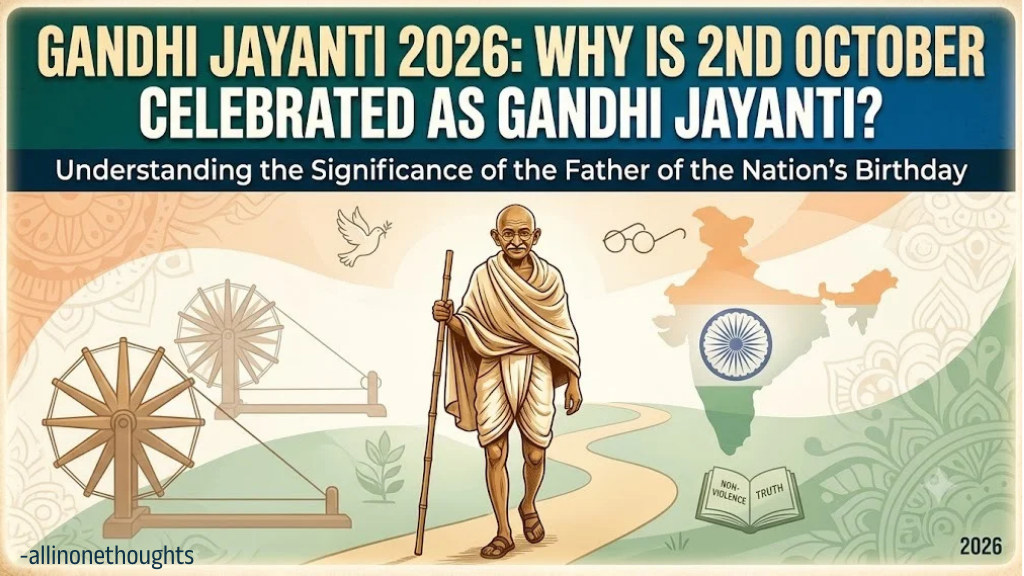
Gandhi Jayanti 2026 will be celebrated on 2 October 2026 to mark the birth anniversary of Mahatma Gandhi. He was born on 2 October 1869 in Porbandar, Gujarat, and played an important role in India’s freedom movement. Gandhi is widely remembered for his ideas of truth, non-violence, peace, and peaceful resistance.
Gandhi Jayanti is not just a day to remember Mahatma Gandhi. It is also an opportunity to learn about his life, ideas, and contribution to India’s history. Schools, colleges, government offices, and other organizations conduct various activities and programmes on this occasion.
The day also has international importance. The United Nations observes 2 October as the International Day of Non-Violence in recognition of Gandhi’s approach to peaceful action.
In this article, we will discuss the Significance of Gandhi Jayanti, why we celebrate Gandhi Jayanti on 2nd October, The Story Behind Gandhi Jayanti, how Gandhi Jayanti is celebrated in India, Mahatma Gandhi Inspirational Quotes, and the message associated with this important day.
Gandhi Jayanti 2026 Date
Gandhi Jayanti 2026 will be celebrated on Friday, 2 October 2026. The day marks the birth anniversary of Mohandas Karamchand Gandhi, popularly known as Mahatma Gandhi.
In India, Gandhi Jayanti is observed as a national holiday. It is a day to remember Gandhi’s contribution to India’s freedom movement and learn about the values associated with his life, including truth, peace, non-violence, simplicity, and social responsibility.
Schools, colleges, government offices, and other organizations often organize special programmes and activities to mark the occasion.
Why We Celebrate Gandhi Jayanti on 2nd October
The reason why we celebrate Gandhi Jayanti on 2nd October is simple. Mahatma Gandhi was born on 2 October 1869 in Porbandar, Gujarat.
His parents were Karamchand Gandhi and Putlibai Gandhi. Gandhi later went to London to study law and also spent several years in South Africa. His experiences there influenced his views on discrimination, justice, and peaceful resistance.
After returning to India, Gandhi became an important leader in the freedom movement. He promoted non-violence and Satyagraha, a method of peaceful resistance based on truth.
Since 2 October is Mahatma Gandhi’s birth anniversary, India observes this day as Gandhi Jayanti every year. The occasion is also a chance to remember his life, work, and ideas.
The Story Behind Gandhi Jayanti
The Story Behind Gandhi Jayanti is closely connected with the life and work of Mahatma Gandhi. He was born as Mohandas Karamchand Gandhi on 2 October 1869 in Porbandar, Gujarat.
Gandhi spent his early years in Gujarat and later travelled to England to study law. After completing his studies, he went to South Africa to work as a lawyer. His experiences there, including facing racial discrimination, had a strong influence on his views about equality, justice, and peaceful resistance.
During his time in South Africa, Gandhi developed and used the idea of Satyagraha, which focused on truth and non-violent resistance. After returning to India, he became actively involved in the country’s freedom movement.
Gandhi played a role in several important movements, including the Champaran Satyagraha, Non-Cooperation Movement, Salt March, and Quit India Movement. His approach encouraged people to participate in the freedom struggle through peaceful methods.
Gandhi became one of the most recognized leaders of India’s independence movement. His ideas focused on truth, non-violence, self-discipline, and social responsibility.
After India became independent in 1947, Gandhi continued to work for peace and communal harmony. He also remained involved in social issues and efforts to reduce tensions between communities.
Mahatma Gandhi was assassinated on 30 January 1948 in New Delhi. His life and ideas continue to be discussed in India and around the world, particularly in relation to non-violence, peace, civil rights, and peaceful resistance.
Gandhi Jayanti, celebrated every year on 2 October, provides an opportunity to remember his life, contribution, and the values associated with his work.
Significance of Gandhi Jayanti
The Significance of Gandhi Jayanti is closely linked to the life, work, and values of Mahatma Gandhi. Celebrated every year on 2 October, the day gives people an opportunity to remember his contribution to India’s freedom movement and learn about his ideas.
1. Remembering Mahatma Gandhi
Gandhi Jayanti is a day to remember Mahatma Gandhi, his life, and his role in India’s freedom struggle. It also helps younger generations learn about his contribution to Indian history.
2. Importance of Non-Violence
Non-violence was an important part of Gandhi’s approach to social and political movements. He promoted peaceful methods to oppose injustice and bring about change.
3. Importance of Truth
Truth was one of the key ideas in Gandhi’s philosophy. His concept of Satyagraha was based on truth and peaceful resistance.
4. Promoting Peace
Gandhi Jayanti encourages people to think about peace, tolerance, and peaceful ways of resolving conflicts. These values remain relevant in everyday life.
5. Remembering India’s Freedom Struggle
The day also helps people understand India’s freedom movement. It gives students and younger generations an opportunity to learn about important events, movements, and people who contributed to India’s independence.
Why Is Gandhi Jayanti Important?
Why Is Gandhi Jayanti Important? The day is important because it gives people a chance to remember Mahatma Gandhi’s life, his role in India’s freedom movement, and the values he promoted.
Mahatma Gandhi played an important role in India’s freedom struggle. He supported truth, non-violence, peace, and peaceful resistance as ways to stand against injustice. His ideas have also been studied and discussed in different parts of the world.
Gandhi Jayanti is also an opportunity to learn from history and think about values such as peace, simplicity, tolerance, and social responsibility. These values can be meaningful in everyday life as well.
Schools and colleges often organize speeches, essays, quizzes, debates, and other activities on Gandhi Jayanti. These programmes help students learn more about Gandhi’s life, writings, movements, and contribution to India’s history.
What Is the Message Behind Gandhi Jayanti?
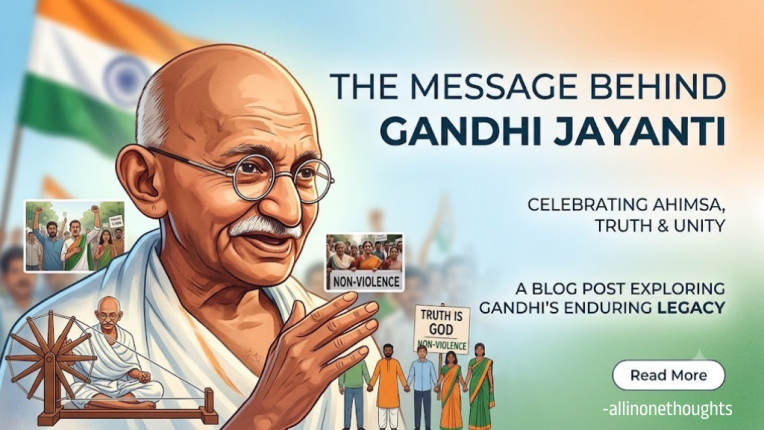
The day is mainly associated with values such as peace, truth, non-violence, and social responsibility. It reminds people of the ideas that Mahatma Gandhi followed throughout his public life.
Gandhi believed that truth and peaceful action could be powerful ways to stand against injustice. He encouraged people to bring change through non-violent methods instead of using violence.
Gandhi Jayanti also reminds us that positive change can begin with our own actions. Respecting others, avoiding violence, helping people in need, and working peacefully with others are some simple values connected with Gandhi’s philosophy.
Therefore, Gandhi Jayanti is not only a day to remember an important historical figure. It is also an opportunity to understand the principles of peace, truth, and non-violence that were closely associated with Mahatma Gandhi and his work.
What Is Gandhi's Famous Line?
Mahatma Gandhi is associated with several well-known sayings. One of the most widely quoted is:
“Be the change that you wish to see in the world.”
This line is frequently attributed to Gandhi, although the exact wording does not appear as a direct quote in his writings. His documented writings do, however, contain ideas about personal responsibility and becoming an example for others.
Another well-known phrase associated with Gandhi’s philosophy is:
“My life is my message.”
This expression reflects the idea that Gandhi’s actions and way of living were closely connected to the principles he discussed.
When using Gandhi quotes in articles, social media posts, or educational content, it is useful to check the original source because many popular quotes are attributed to him in shortened or modified forms.
Mahatma Gandhi Inspirational Quotes
Mahatma Gandhi Inspirational Quotes are often shared on Gandhi Jayanti to remember his ideas about truth, peace, non-violence, kindness, and personal responsibility. His words continue to inspire people to think about how small actions can create positive change.
Here are some commonly attributed quotes and sayings associated with Mahatma Gandhi:
“My life is my message.”
“In a gentle way, you can shake the world.”
“The future depends on what you do today.”
“Where there is love there is life.”
“An eye for an eye only ends up making the whole world blind.”
“Be the change that you wish to see in the world.”
“Truth never damages a cause that is just.”
“Strength does not come from physical capacity. It comes from an indomitable will.”
Gandhi Jayanti 2026 Theme
The Gandhi Jayanti 2026 theme is an important topic for people looking for information about the celebration. However, the official national theme should be mentioned only after it is formally announced by the concerned government authority.
Gandhi Jayanti programmes may focus on important values and social issues such as non-violence, peace, truth, cleanliness, community service, and social responsibility. Schools, colleges, government departments, and other organizations may also choose their own themes for special events and activities.
Since the theme of different programmes can be different, it is important to check official government announcements for the confirmed Gandhi Jayanti 2026 theme. Readers should avoid relying on unverified information or social media posts.
Until an official announcement is made, the focus of Gandhi Jayanti remains closely connected with the values associated with Mahatma Gandhi, especially truth, non-violence, peace, and social responsibility.
How Is Gandhi Jayanti Celebrated in India?
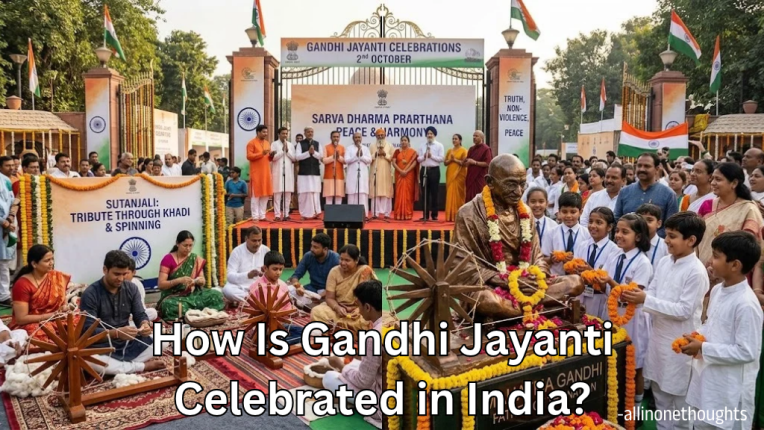
The day is marked with educational, cultural, and social activities. Schools, colleges, government organizations, and communities organize programmes to remember Mahatma Gandhi and his values.
1. Prayer Meetings
Prayer meetings are held at places associated with Gandhi. Special tribute programmes are also held at Raj Ghat in New Delhi, his memorial.
2. Tribute Ceremonies
Government officials, students, and the public pay tribute to Gandhi and remember his contribution to India’s freedom movement.
3. School and College Activities
Students take part in:
- Essay and speech competitions
- Drawing and poster making
- Quizzes and debates
- Cultural programmes
4. Cleanliness Drives
Schools and community groups may organize cleanliness drives and awareness campaigns to promote clean surroundings.
5. Community Service
People and organizations may participate in social service, cleanliness campaigns, and other community activities.
Overall, Gandhi Jayanti is an opportunity to remember Gandhi and learn about peace, truth, non-violence, cleanliness, and social responsibility.
Gandhi Jayanti and the International Day of Non-Violence
Gandhi Jayanti also has international significance.
The United Nations General Assembly declared 2 October as the International Day of Non-Violence in 2007. The date was chosen because it is Mahatma Gandhi’s birthday.
The international observance highlights the promotion of non-violence through education and public awareness.
This gives 2 October significance beyond India’s national calendar and connects Gandhi’s legacy with global discussions about peaceful conflict resolution and non-violent action.
Conclusion
Gandhi Jayanti 2026 will be celebrated on 2 October 2026 to mark the birth anniversary of Mahatma Gandhi. The day reminds us of his contribution to India’s freedom movement and the values associated with his life.
We celebrate Gandhi Jayanti on 2nd October because Gandhi was born on 2 October 1869. The day is also observed by the United Nations as the International Day of Non-Violence.
Gandhi Jayanti is an opportunity to remember and learn about truth, peace, non-violence, simplicity, and social responsibility. Schools, communities, and organizations mark the occasion through different activities and programmes.
For the Gandhi Jayanti 2026 theme, readers should check official announcements for the latest confirmed information.