Spiritual Growth: Meaning, 10 Simple Practices, Signs, and Benefits
 All in One thoughts
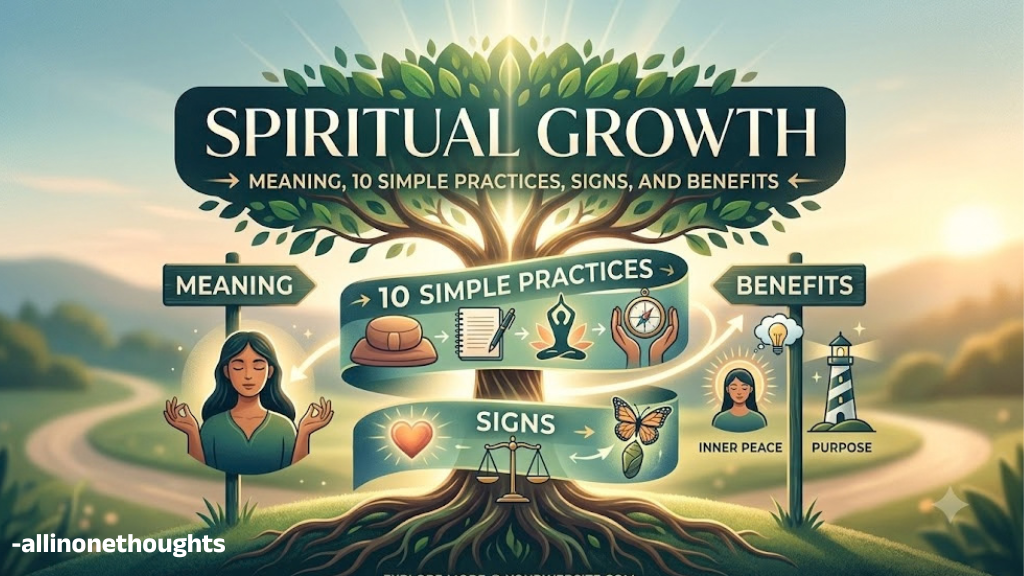
Spiritual growth is a personal journey of understanding yourself, developing inner awareness, and creating a deeper sense of meaning in life. It does not necessarily depend on a particular religion or belief system. For many people, it can involve mindfulness, meditation, gratitude, self-reflection, compassion, and learning to live with greater awareness.
Unlike material achievements, spiritual growth focuses more on what happens within you. It can help you understand your thoughts and emotions, recognize your values, and respond to life’s challenges with greater awareness.
In this guide, we will explore the meaning of spiritual growth, its benefits, signs of spiritual growth, and 10 simple spiritual growth practices that you can include in everyday life.
What Is Spiritual Growth?
Spiritual growth is the process of understanding yourself better, developing inner peace, and finding greater meaning and purpose in life. It helps you become more aware of your thoughts, emotions, values, and actions.
Spiritual growth does not mean becoming perfect or avoiding life’s problems. Instead, it is about learning from your experiences, becoming more mindful, and responding to situations with greater awareness and understanding.
For some people, spiritual growth may be connected to religion, prayer, or faith. For others, it may involve meditation, mindfulness, spending time in nature, reading, self-reflection, or personal development.
There is no single path to spiritual growth. Everyone’s journey is different and can change over time as you learn more about yourself, your values, and what truly matters to you.
Spiritual Growth Meaning
Spiritual growth means developing a deeper understanding of yourself, your thoughts, emotions, values, and purpose in life. It is a journey that can help you become more aware, peaceful, compassionate, and intentional in your daily life.
Some important parts of spiritual development include:
- Greater self-awareness – Understanding your thoughts, feelings, and reactions.
- Knowing your values – Becoming clear about what truly matters to you.
- Practicing compassion – Treating yourself and others with kindness and understanding.
- Developing gratitude – Appreciating the positive things in everyday life.
- Being more mindful – Paying attention to the present moment instead of constantly worrying about the past or future.
- Finding meaning in life – Understanding what gives your life purpose and value.
- Learning from challenges – Using difficult experiences as opportunities to learn and grow.
- Developing inner peace – Learning to respond to life’s ups and downs with greater calm.
- Building healthier relationships – Communicating with greater patience, empathy, and understanding.
- Accepting yourself – Recognizing your strengths and weaknesses without unnecessary self-judgment.
Spiritual growth does not happen overnight. It is a gradual and personal journey that develops through everyday experiences, self-reflection, and consistent practice.
Why Is Spiritual Growth Important?
Today, busy schedules, work pressure, social expectations, and constant digital distractions can make it difficult to focus on our inner well-being. We often spend a lot of time working toward external goals while giving less attention to our thoughts, emotions, and personal values.
Spiritual growth gives you an opportunity to slow down, reflect, and understand yourself better. It can help you become more aware of what truly matters in your life.
During your spiritual growth journey, you may ask yourself important questions such as:
- What is truly important to me?
- What kind of person do I want to become?
- How do I handle difficult situations?
- What values guide my decisions?
- What gives my life meaning and purpose?
- How can I be more kind and understanding toward myself and others?
Reflecting on these questions can improve self-awareness, mindfulness, compassion, and clarity. Over time, this may help you make more thoughtful decisions and live in a way that better reflects your personal values.
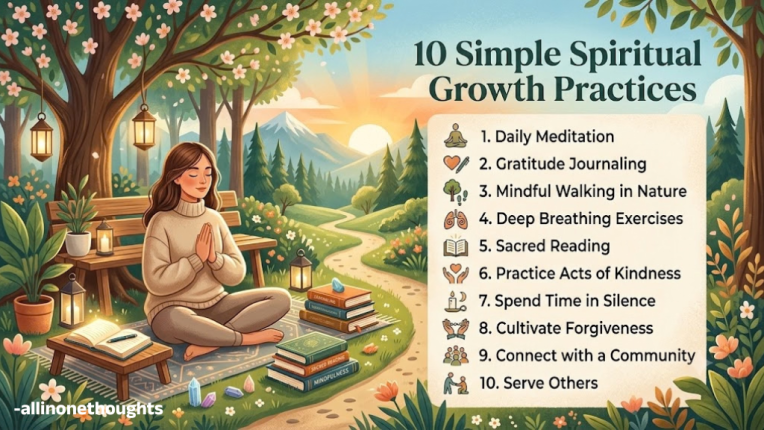
10 Simple Spiritual Growth Practices
You do not need to make major changes in your life to begin your spiritual growth journey. Simple habits, when practiced regularly, can help you become more mindful, self-aware, and connected with what matters to you.
Here are 10 easy spiritual growth practices you can include in your daily routine:
1. Practice Meditation
Meditation is a simple way to slow down and observe your thoughts. Even a few minutes of quiet meditation can help you become more aware of your thoughts and feelings.
Sit comfortably, focus on your breathing, and gently bring your attention back whenever your mind wanders. The aim is not to stop thinking but to become more aware of your thoughts.
2. Practice Mindfulness
Mindfulness means paying attention to the present moment instead of constantly thinking about the past or future.
You can practice mindfulness while eating, walking, working, or talking with someone. Simply focus on what you are doing and notice how you feel.
Regular mindfulness can become an important part of your spiritual growth routine.
3. Keep a Gratitude Journal
Gratitude helps you notice and appreciate the positive things in your life.
At the end of each day, write down three things you are thankful for. They could be as simple as:
- A good conversation
- Time with family
- A peaceful morning
- Completing an important task
- Enjoying nature
Gratitude does not mean ignoring problems. It simply helps you notice the things you value.
4. Spend Time in Silence
Constant notifications, social media, and daily responsibilities can leave little time for quiet reflection.
Spend a few minutes each day without your phone or other distractions. You can sit quietly, take a peaceful walk, or simply enjoy some alone time.
This can give you space to understand your thoughts and feelings better.
5. Read Meaningful Books
Books about spirituality, philosophy, mindfulness, personal development, and different wisdom traditions can introduce you to new ideas and perspectives.
While reading, take some time to think about what you have learned and how it relates to your own life.
Ask yourself: “What can I learn from this idea?”
6. Practice Self-Reflection
Self-reflection helps you understand your thoughts, emotions, actions, and habits.
At the end of the day or week, ask yourself:
- What did I learn today?
- How did I handle difficult situations?
- Did my actions match my values?
- What could I do differently next time?
- What am I grateful for?
Regular reflection can help you understand yourself and recognize patterns in your behavior.
7. Spend Time in Nature
Spending time in nature can be a simple way to slow down and become more present.
Take a walk in a park, sit under a tree, watch the sunset, or simply spend some time outdoors. Pay attention to your surroundings instead of staying focused on your phone.
These simple moments can create opportunities for reflection and appreciation.
8. Practice Compassion
Compassion means treating yourself and others with kindness and understanding.
You can practice it by listening carefully, helping someone, offering encouragement, or being patient with yourself when things do not go as planned.
Spiritual growth is not only about inner thoughts; it can also be reflected in how you treat the people around you.
9. Accept What You Cannot Control
Not everything in life is within our control. Trying to control every situation can lead to unnecessary frustration.
Instead, focus on what you can control—your choices, actions, attitude, and responses.
Learning to accept what you cannot change can help you approach difficult situations with greater awareness and calm.
10. Live According to Your Values
Understanding your personal values is an important part of spiritual development.
Think about the qualities that matter most to you, such as honesty, kindness, family, responsibility, freedom, or compassion.
Then ask yourself whether your everyday choices reflect those values. When your actions are aligned with what you believe is important, life can feel more meaningful and intentional.
Start Your Spiritual Growth Journey Slowly
You do not need to practice all 10 habits at once. Choose one or two spiritual growth practices that feel comfortable and make them part of your daily routine.
With regular self-reflection and awareness, these small habits can become meaningful parts of your personal and spiritual growth journey.
10 Signs of Spiritual Growth
Spiritual growth is different for everyone, but certain changes may indicate that you are becoming more self-aware.
Here are some common signs of spiritual growth:
1. Greater Self-Awareness
You may start understanding your thoughts, emotions, habits, and reactions more clearly.
Instead of reacting immediately, you may pause and think about why you feel or behave a certain way.
2. More Inner Calm
Life will still have stressful and difficult moments, but you may learn to handle them with greater patience.
Inner calm does not mean never feeling sad, angry, or worried. It means becoming better at understanding and managing your responses.
3. Better Understanding of Yourself
You may become clearer about your values, priorities, strengths, and personal goals.
You may also begin to understand what is truly important to you and what areas of your life you want to improve.
4. Greater Compassion
You may become more patient and understanding toward yourself and other people.
You may also become more open to different opinions and perspectives instead of judging others quickly.
5. Less Need for Approval
Another possible sign of spiritual growth is becoming less dependent on other people’s approval.
You can still listen to advice and feedback, but your decisions may be guided more by your own values and understanding.
6. A Stronger Sense of Purpose
You may begin thinking more deeply about what gives your life meaning and purpose.
This can help you become more intentional about how you spend your time, build relationships, and make important life decisions.
7. Learning From Life Experiences
You may start seeing difficult experiences as opportunities to learn and understand yourself better.
Rather than focusing only on what went wrong, you may ask, “What can I learn from this experience?”
8. Greater Appreciation for Everyday Life
Simple things such as spending time with loved ones, enjoying nature, or having a peaceful moment may become more meaningful.
This greater appreciation can encourage gratitude and mindfulness in everyday life.
9. More Acceptance
You may become more accepting of yourself, including your strengths and weaknesses.
Acceptance does not mean giving up on personal growth. It means understanding where you are while continuing to learn and improve.
10. Living More According to Your Values
You may notice that your everyday choices increasingly reflect the values and principles that are important to you.
This can make your life feel more intentional, meaningful, and authentic.
Benefits of Spiritual Growth
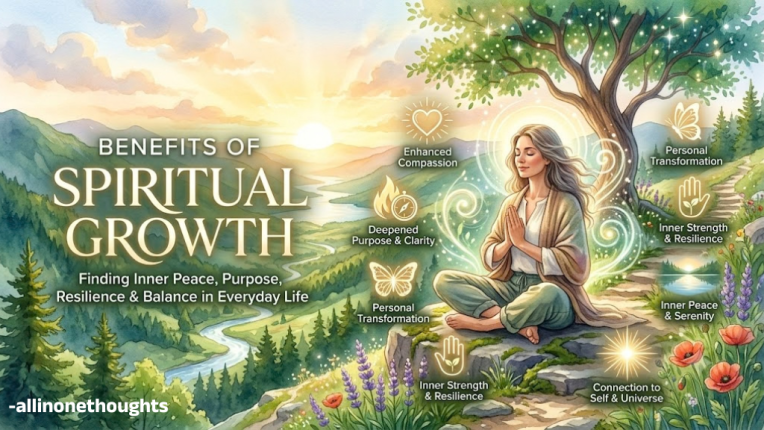
The benefits of spiritual growth can be personal and may differ from one individual to another. Spiritual practices are not a replacement for professional medical or mental health care, but they can be meaningful components of a person’s overall lifestyle.
Some possible benefits of spiritual growth include:
- Greater self-awareness
- More mindful decision-making
- A stronger sense of purpose
- Better emotional awareness
- Greater appreciation for everyday experiences
- Improved sense of connection
- More intentional living
- Greater compassion toward yourself and others
- Better ability to reflect on challenges
- A deeper understanding of personal values
A Balanced Approach to Spiritual Growth
Spiritual growth does not mean that you will always feel happy or never face problems. Life will continue to have challenges, but greater self-awareness and reflection may help you approach those experiences with a more thoughtful and balanced mindset.
How to Start Your Spiritual Growth Journey
Starting your spiritual growth journey does not have to be difficult. You can begin with small, simple habits that fit naturally into your daily routine.
Spend just 5–10 minutes a day in quiet reflection, meditation, journaling, or mindfulness. Choose a peaceful time when you can focus without distractions.
You can also ask yourself a simple question at the end of each day:
“What did I learn about myself today?”
Writing down your thoughts can help you understand your emotions, actions, and experiences more clearly.
Remember, consistency is more important than having a complicated routine. Start with one practice and gradually build from there.
Every person’s spiritual journey is different. Avoid comparing your progress with others because people have different beliefs, experiences, and goals.
Most importantly, make your spiritual growth journey personal. Focus on honest self-reflection, your values, and the things that give your life meaning and purpose.
Common Obstacles to Spiritual Growth
Spiritual development can sometimes feel difficult. Common obstacles may include:
- Lack of time
- Constant digital distractions
- Difficulty staying consistent
- Overthinking
- Fear of change
- Comparing yourself with others
- Expecting immediate results
- Avoiding uncomfortable self-reflection
The solution does not have to be complicated. Start small and focus on consistency.
Even a few minutes of mindful reflection each day can create a regular opportunity to slow down and reconnect with yourself.
Is Spiritual Growth Connected to Religion?
Spiritual growth and religion can be connected, but they are not necessarily the same thing. For some people, spiritual development is an important part of their religious faith and may include prayer, worship, scripture, or participation in a spiritual community.
For others, spirituality may be explored through meditation, mindfulness, spending time in nature, philosophy, self-reflection, or personal values, without following a specific religious tradition.
There is no single way to experience spiritual growth. Each person’s journey can be different and may be shaped by their beliefs, experiences, values, and understanding of life.
The important part is to find practices that encourage self-awareness, compassion, reflection, and a deeper sense of meaning in your life.
Final Thoughts
Spiritual growth is a personal journey of inner awareness, reflection, meaning, and personal development. It is not about becoming perfect or avoiding every challenge in life.
Simple practices such as meditation, mindfulness, gratitude, self-reflection, spending time in nature, compassion, and value-based living can help create more opportunities for inner development.
The most important thing is to start gradually and remain consistent.
Instead of asking whether you have reached a particular level of spiritual growth, focus on the questions, lessons, and awareness you develop along the way.
Your journey can change as you learn more about yourself, your values, your relationships, and what gives your life meaning.
FAQ's About Spiritual Growth
1. What is spiritual growth in simple words?
Spiritual growth is the process of developing greater self-awareness, inner understanding, compassion, purpose, and connection with what you consider meaningful in life.
2. How can I improve my spiritual growth?
You can explore practices such as meditation, mindfulness, gratitude journaling, self-reflection, spending time in nature, reading meaningful books, and living according to your personal values.
3. What are the signs of spiritual growth?
Possible signs include greater self-awareness, increased compassion, clearer personal values, more thoughtful reactions, a stronger sense of purpose, and greater appreciation for everyday experiences.
4. How long does spiritual growth take?
There is no fixed timeline. Spiritual growth is generally an ongoing personal journey rather than a process with a specific completion date.
5. Can meditation help with spiritual growth?
Meditation can be one useful practice for developing mindfulness and self-awareness. Different people may experience it differently, so it is helpful to find a practice that suits your beliefs and lifestyle.
6. Is spiritual growth the same as personal growth?
Not exactly. Personal growth often focuses on individual development and skills, while spiritual growth may focus more on meaning, values, inner awareness, purpose, and connection. However, the two areas can overlap.